Each Line on a Spec Sheet is a Product; Why Data Centers are Turning into Industrial Plants
AI is turning the data center into an industrial plant, and the equipment around it into standardized categories.
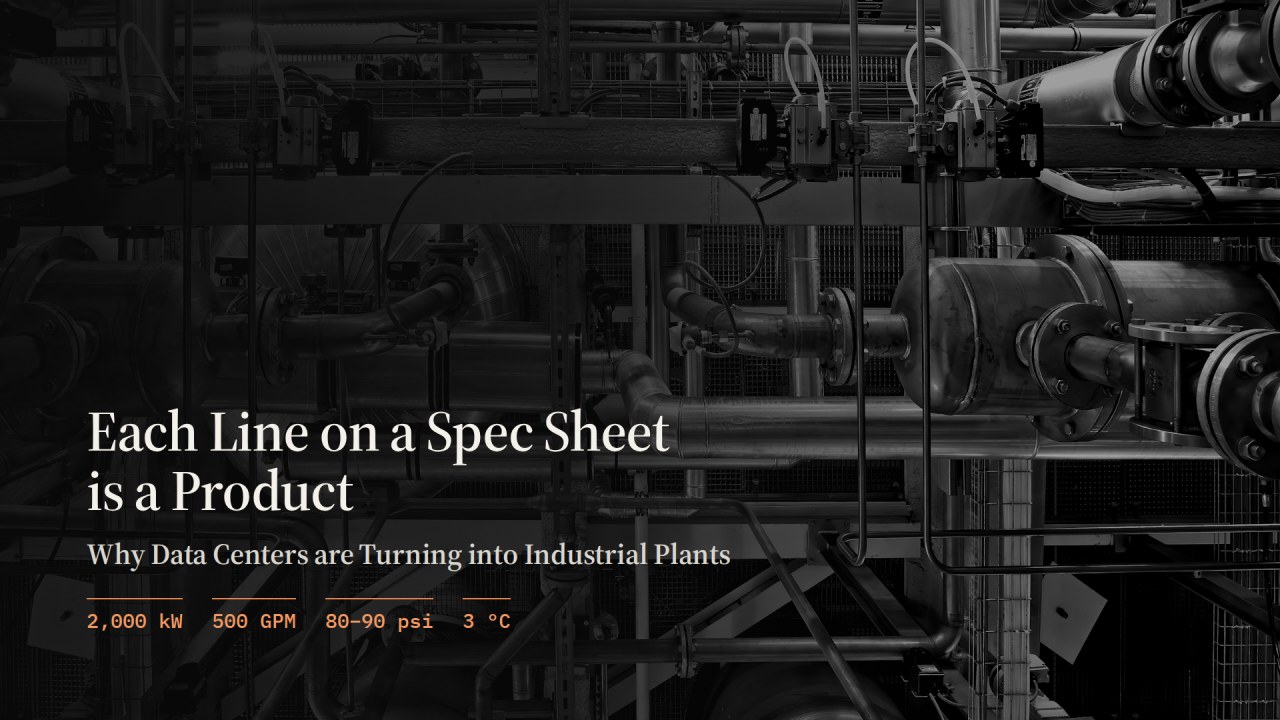
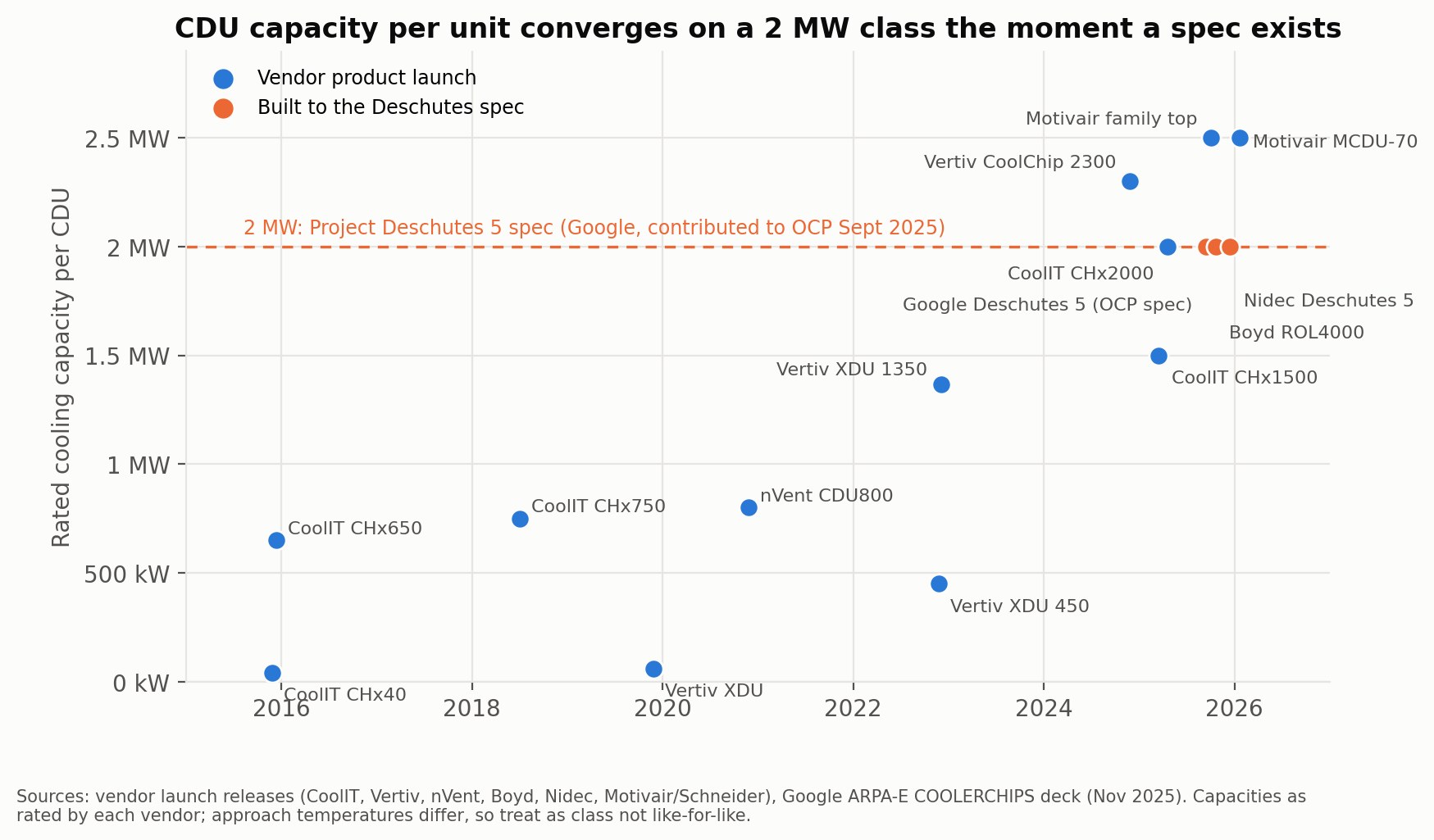
In September 2025, Google sent the Open Compute Project a spec sheet for a cabinet. OCP is the consortium the hyperscalers use to publish hardware designs they want the rest of the industry to build. The cabinet was a coolant distribution unit, a pump-and-heat-exchanger box that sits at the end of a row of racks and moves warm water between the cold plates on the chips and the building's cooling loop. The sheet called for 2 megawatts of heat removal, 500 gallons a minute, 80 to 90 psi of available pressure and a 3°C approach. Google had built four generations for its own halls since it started liquid-cooling TPUs in 2018, and this was the fifth.
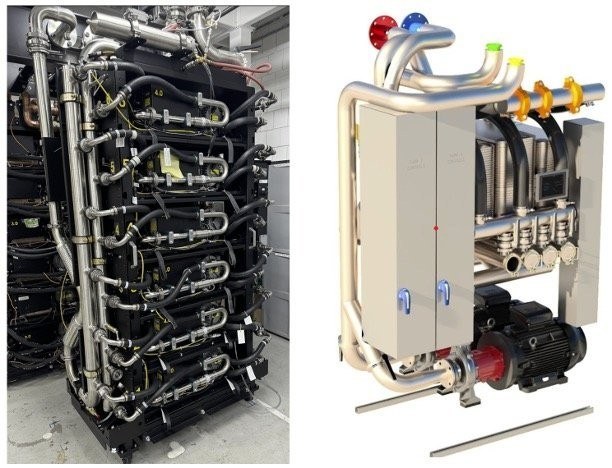
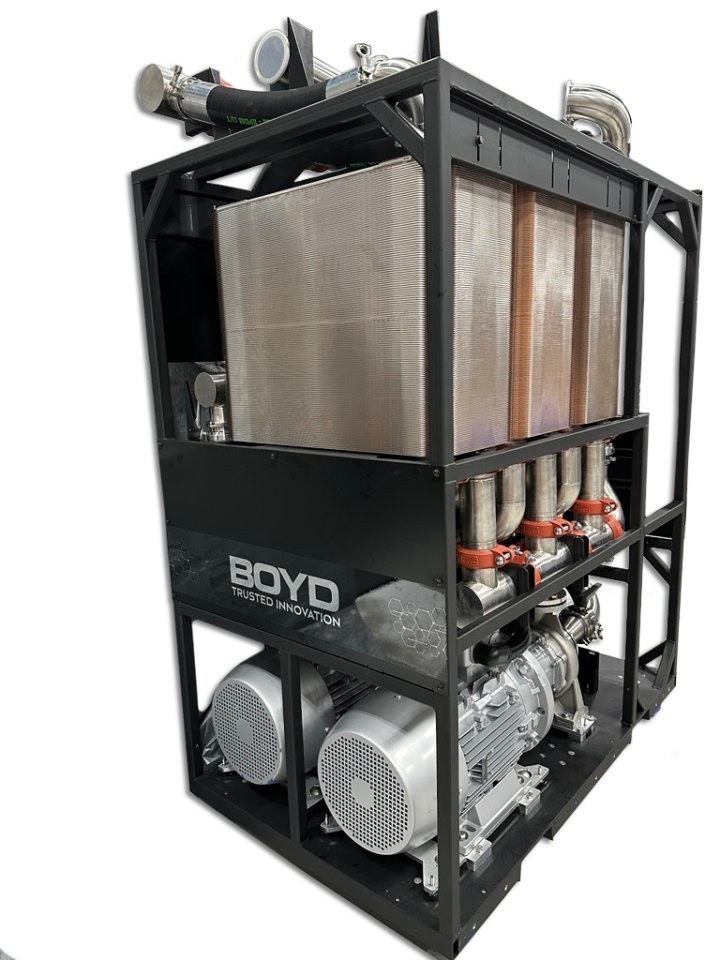
Six weeks later, at the OCP Summit in San Jose, eight manufacturers were showing units built to that sheet: Boyd, CoolerMaster, Delta, Envicool, Nidec, nVent, Stulz and Vertiv (Boyd and Nidec rated theirs at exactly 2 MW). For a decade the vendors in this category had competed on size, from CoolIT's 650 kW unit in 2015 through nVent's 800 kW in 2020 to Vertiv's 2.3 MW in late 2024. Then a number appeared on a public document and the race stopped. A product class now had a name and a rating, and an engineer could write "2 MW CDU" into a basis of design and expect eight bids.
The first time is engineering. The fifth time is a product. What began as a custom integration inside Google became a package, and the package became a specification. The specification created a category, and the category is filling with manufacturers who will spend a decade servicing and retrofitting the units they ship. That loop is how pumps, switchgear and chemical-feed skids became catalog items in every wastewater plant in the country. What is new is that it is running through the entire physical data center at once, and that the hyperscalers are running it on purpose. This example is just one of many as you have a whole building of equipment.
Data centers had a standard already. That is not what changed.
The obvious objection is that data centers have been standardized for twenty years. ANSI/TIA-942, the telecom-industry standard that defines tiers, cabling and floor loading for a data center, was first published in 2005. That is true and beside the point, because the standard is now being amended as fast as its committee can move to keep up with what goes inside. Revision C arrived in May 2024, nineteen years after the original. Twenty-two months later the TIA announced an addendum for AI, covering high-density cabling, liquid cooling and electrical systems, with publication targeted for mid-2027. The building standard is chasing the equipment.
The Uptime Institute's 2026 survey puts the average rack density across the industry at just over 11 kW, and only 24% of operators report having any rack at 30 kW or more. Three-quarters of the world's data centers hold nothing that would trouble an air-cooled room. The industry as a whole is not what is changing; a distinct class of plant is forming inside it, the way a refinery is a distinct class of plant inside the chemical business, and that class is what is being standardized. In March I argued that AI is an industrial contest being run by people who still think it is a software contest. This is what the industrial contest looks like from inside the equipment catalog.
The chip did not force this. The rack did.
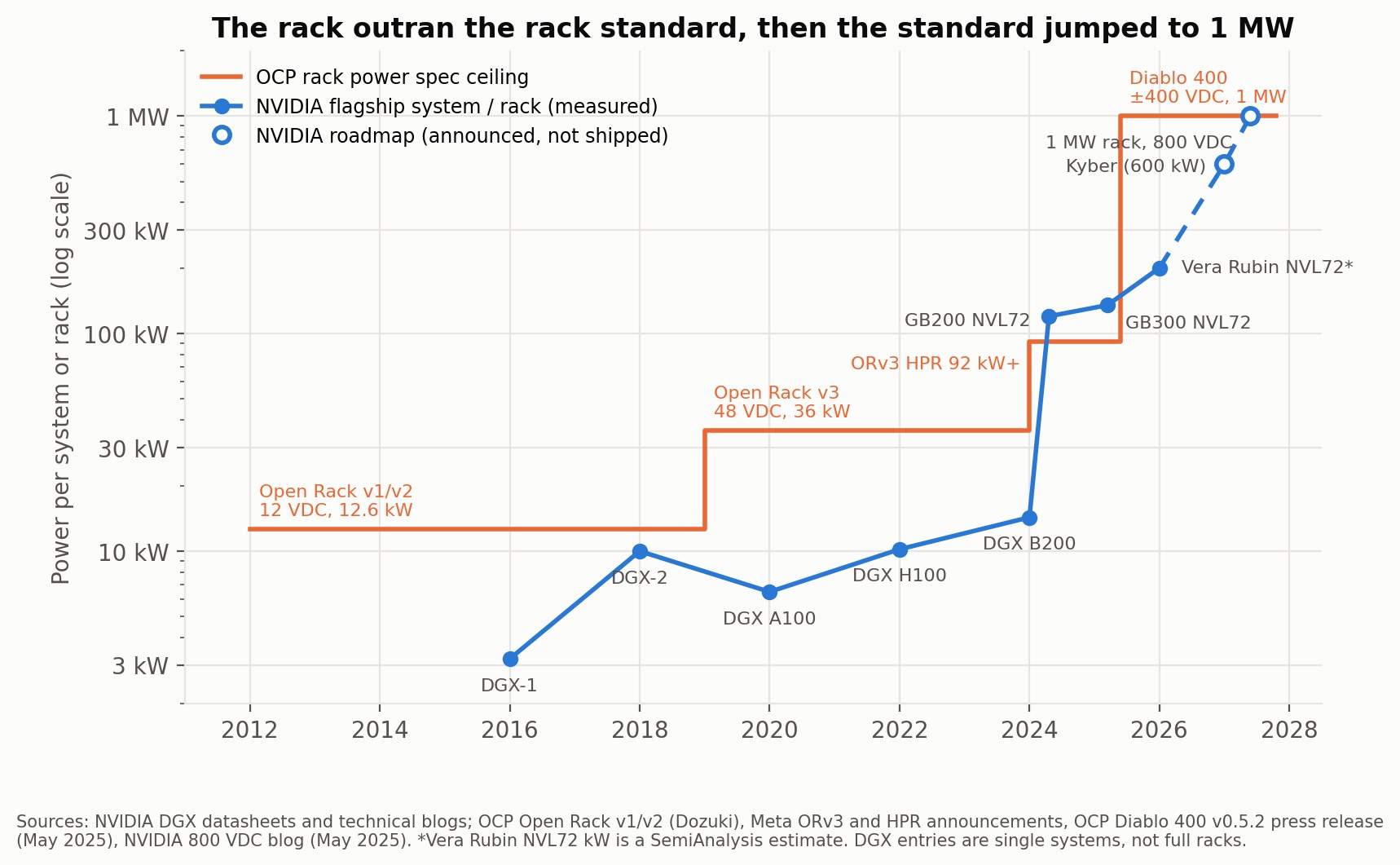
Power per GPU package sat at 300 watts from NVIDIA's K80 in 2014 through the V100 in 2017 and reached 400 watts with the A100. It then went to 700, 1,000 and 1,400 watts across Hopper, Blackwell and Blackwell Ultra, with roadmap figures of 1,800 and 3,600 watts for the two Rubin generations. That is twelve-fold in seven years after six flat ones. For most of that time the chip's power stayed inside a server, and NVIDIA's DGX systems drew a manageable 3 to 14 kW. In March 2024 NVIDIA stopped selling the server and sold the rack instead, the GB200 NVL72 at 120 kW, and rack power stepped up ten-fold in a single generation. The GB300 followed at roughly 135 kW, Vera Rubin is estimated near 200 kW, and the Kyber rack announced for 2027 was quoted by Jensen Huang at 600 kW. In the Rubin brief this spring I argued that the rack had become the design unit of the facility. The data shows the month it happened.
The power standard jumped ahead of the hardware
Here is the part I did not expect. A 48-volt busbar, the copper bar that carries power down the back of a rack, cannot deliver a megawatt without conductors the size of railroad iron, so the rack's voltage has to rise. Google, Meta and Microsoft formed a project at OCP called Mt Diablo to standardize the electrical and mechanical interfaces for a rack fed at ±400 VDC. The resulting Diablo 400 specification, effective May 30, 2025, defines racks from 100 kW up to 1 MW. NVIDIA is pushing the same idea as an 800 VDC architecture. OCP's own record of its rack-power standards runs 12.6 kW in 2012, 36 kW in 2019, 92 kW in 2024 and 1 MW in 2025.
The 36 kW standard held for five years while shipping racks went to 120 kW, so for a while the hardware outran the standard. Then the standard did not increment; it changed voltage and jumped 27-fold. It did so in May 2025, when the largest rack anyone could buy drew 135 kW. Standards usually arrive to tidy up a market that already exists, and this one arrived to define a market that does not exist yet. The reason is in the mandate of OCP's Open Data Center for AI initiative, launched in October 2025: standardizations "allowing advanced high-density AI infrastructure to be deployed as flexibly as traditional compute," with "fungibility" as the stated goal. The operators want interchangeable parts, and they are publishing the interfaces to get them.
The ecosystem responded the way ecosystems respond to a published interface. NVIDIA named 18 companies building to its 800 VDC architecture in May 2025, 20-plus in October, 30 by March 2026 and more than 80 by August. The parts list already reads like an equipment schedule for a substation: transformer rectifiers, solid-state transformers, DC breakers, busway, DC-DC converters, side power racks, row power centers. The 2026 National Electrical Code added an Article 270 for systems above 1,000 VAC and 1,500 VDC. Nothing in it yet describes an 800 VDC busway running past a row of racks, which is a fair measure of how far ahead of the code the equipment has moved.
The electrical room is now a product with a model number
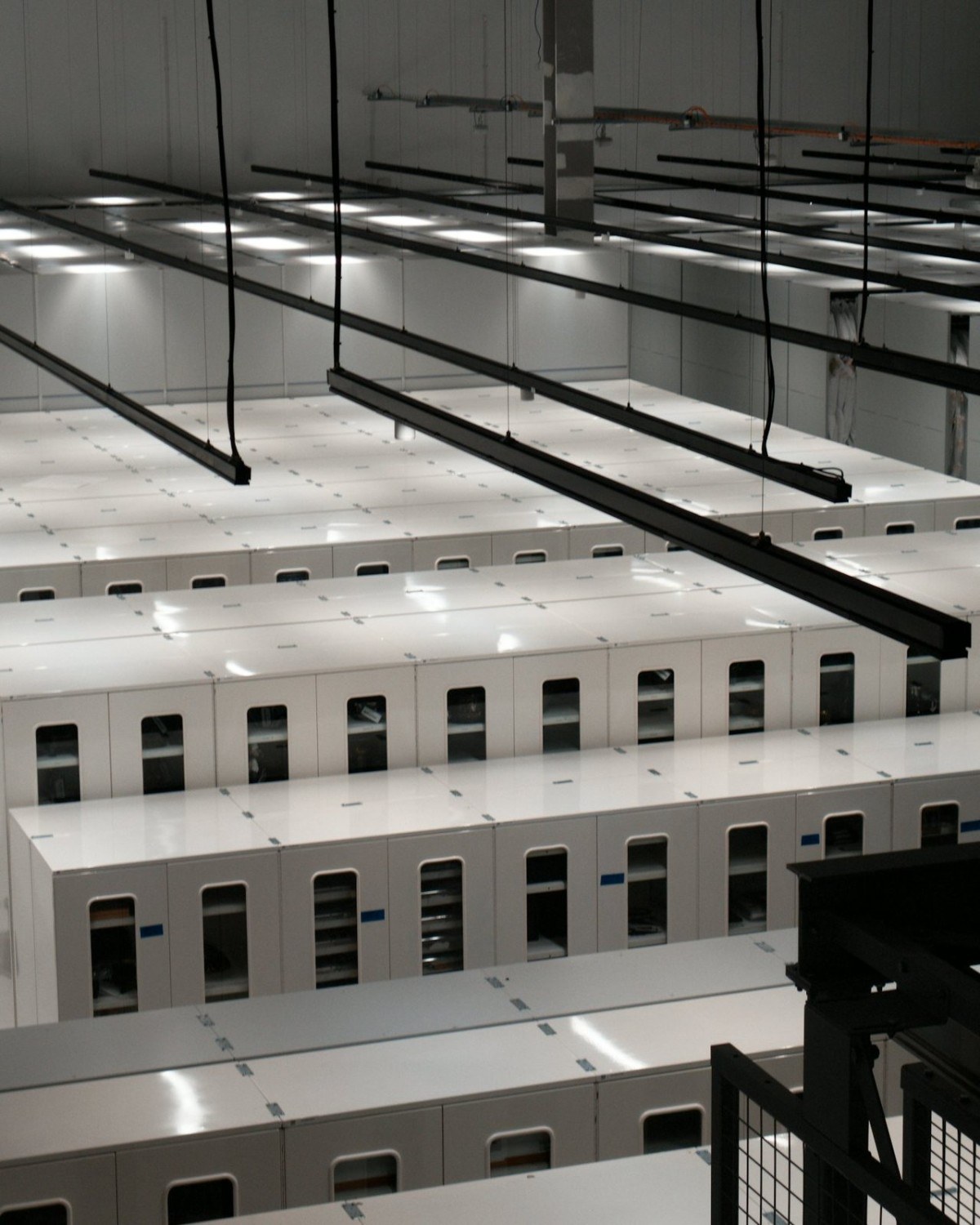
Once the interfaces are public, the next thing to be productized is the room. On September 17, Schneider Electric announced prefabricated power modules at 2, 2.25 and 2.5 MW per container, with the UPS, power management and liquid-cooling controls inside. They are built and tested at its Barcelona plant. The company describes the move as shifting "engineering, manufacturing, integration and testing into a controlled production environment." Eaton sells steel-skid power assemblies for the same reason and markets them for "fast-tracked infrastructure upgrades in legacy buildings." The old sequence of design, procure, ship, install, wire, integrate and commission is being replaced by select, configure, factory-build, factory-test, ship and connect. Construction becomes assembly. That is also the answer to the commissioning problem I wrote about in the spring, because a container that leaves Barcelona with a factory acceptance test written against the owner's commissioning plan arrives on site as a thing to be confirmed rather than discovered.
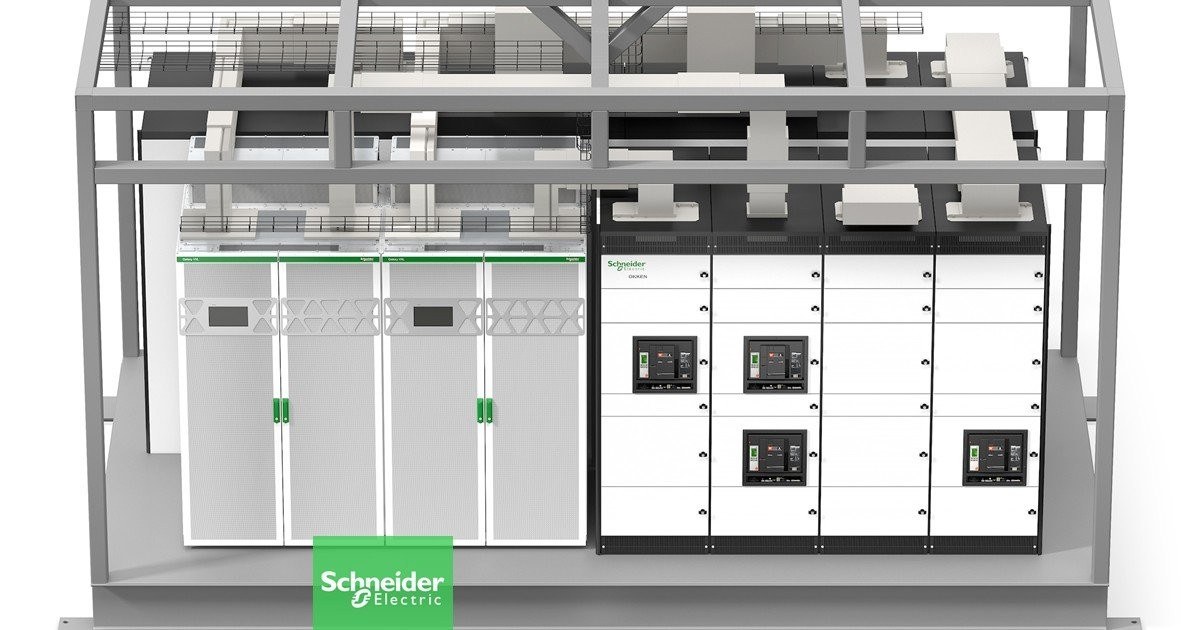
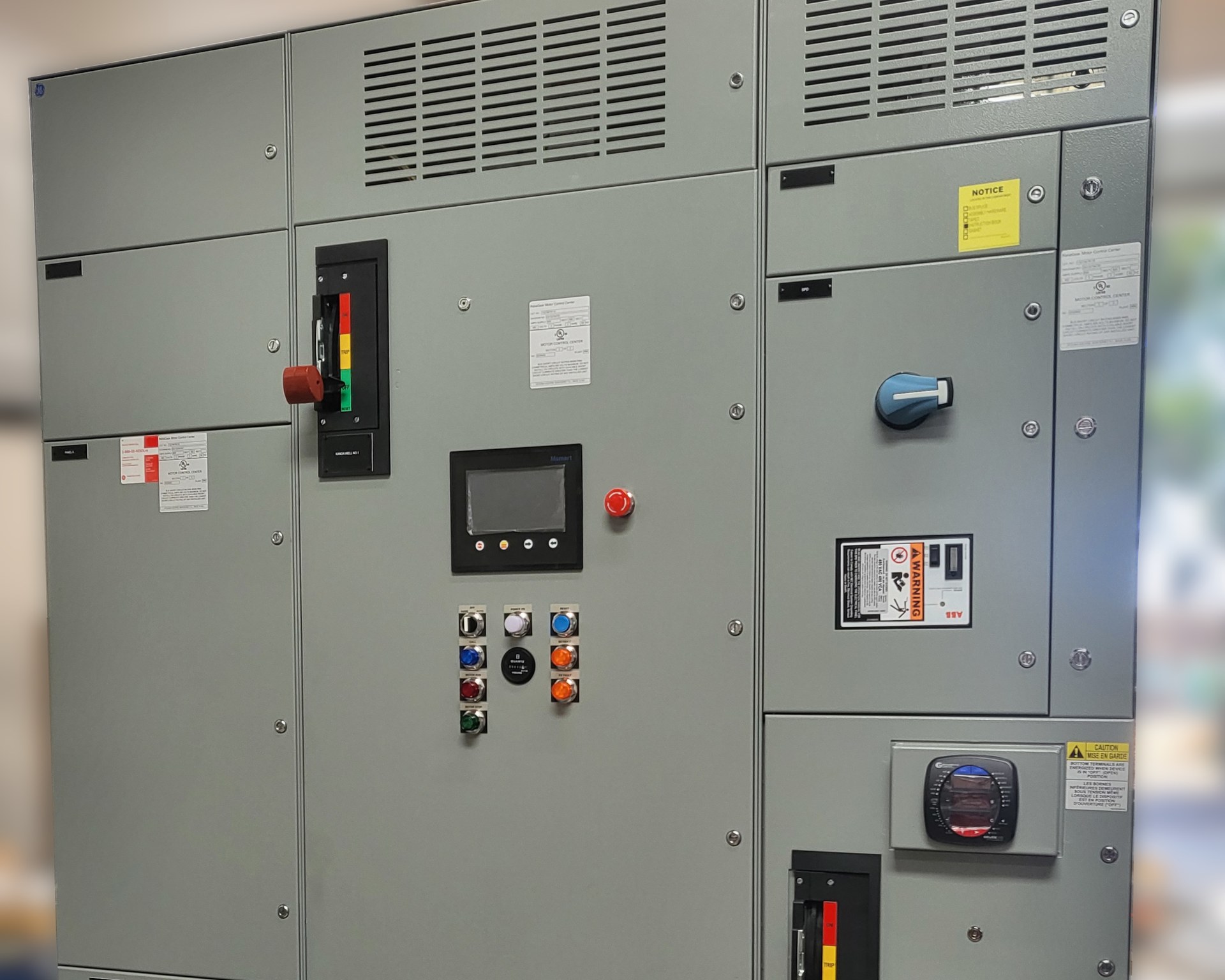
A mature industrial vertical is recognizable by its vocabulary. A wastewater plant is not a product, but everyone who designs one recognizes pumps, blowers, motor control centers, clarifiers, chemical-feed skids and instrumentation, and competes to supply those slots. The high-density data hall has acquired a vocabulary of its own in about three years: CDUs, rack manifolds, power shelves, busways, battery backup units, power sidecars, row power centers, DC power blocks. A taxonomy is forming, and every noun in it is a slot somebody is now manufacturing for.
The server now decides whether the building has a chiller plant
The reversal runs all the way out to the walls. A data center used to supply standardized power, cooling and connectivity to IT equipment that kept its requirements to itself. Now the requirements of the compute reach outward into the rack, the electrical distribution, the cooling loop and the mechanical plant.
ASHRAE, the engineering society whose thermal guidelines every data-center mechanical design cites, classifies liquid-cooled equipment by the warmest facility water it will accept, from W17 through W45 and W+, where the number is the supply temperature in °C. The classes date from 2011, so none of this is new, but AI made it consequential. Equipment that needs W17 or W27 water generally needs chillers, while equipment that can take W40 or warmer can often run on dry coolers alone. The thermal class of the server therefore decides whether the building needs a chiller plant. That sentence would have made no sense to a mechanical engineer in 2015, and it is now the first question on a retrofit walkthrough.
TIA-942-C shows the same reach at a smaller scale. Its 2024 revision requires cabinets at least 800 mm wide in the switch areas, adds an annex on immersion cooling, and replaces the word "cooling" with "heat removal" throughout, because the old word no longer covers the job. The standards bodies publish on cycle time, ASHRAE roughly every four years and the NEC every three. OCP published three rack-power documents in the decade to 2022 and nine in the thirty months since May 2024. For an equipment manufacturer in 2026, the operative specification is an OCP document, and the codes are catching up to it.
The installed base is the next market
Every time the architecture moves, it strands what was built to the last one. Three-quarters of operators have no 30 kW rack, and many of them have tenants who want one. STL Partners estimated in June that retrofitting an existing facility for liquid cooling runs around $2 million per megawatt against upwards of $11 million for new liquid-cooled capacity. That is an analyst figure with the usual caveats about downtime and lost tenancy, but the gap is large enough to survive them. Schneider's brownfield playbook reads as a product catalog for this market: rear-door heat exchangers for racks that can stay on air, liquid-to-air units for halls with no facility water, and rack-by-rack phasing so air and liquid coexist during the transition. NVIDIA's side power rack exists for the same reason, to put 800 VDC in a building whose upstream electrical plant will never be replaced.
A wastewater plant can run forty years without its process architecture changing. A data-center shell will last as long, but what it has to support now changes every two or three years, so obsolescence in compute drives recurring capital into otherwise long-lived assets. That is an attractive place to sit for anyone between the building and the silicon.
Two tiers serve the specification
The specification is the market now, and two tiers compete to supply it. The majors compete for the named slot. Vertiv's reported backlog went from $5.0 billion in the third quarter of 2023 to $15.0 billion at the end of 2025, at which point the company stopped reporting it. Schneider bought a 75% stake in Motivair, a liquid-cooling specialist, for $850 million in February 2025, and now ships 2.5 MW CDUs and 2.5 MW power containers. Eaton reported data-center orders up roughly 200% in the fourth quarter of 2025 and 240% in the first quarter of 2026. In March it completed the $9.5 billion purchase of Boyd Thermal, one of the eight companies that had shown a Deschutes cabinet at the summit five months earlier. Behind the three sit the DC-power names on NVIDIA's partner list, ABB, Siemens, GE Vernova, Hitachi Energy and Mitsubishi Electric. The two acquisitions are the loop's last stage on the public record: once a slot has a name, a major buys the company that filled it first.
The other tier does not get named in announcements, and it is the one many of my readers work in. Control-panel and switchboard shops, UL 508A panel builders, controls integrators, enclosure fabricators and skid integrators already build to a drawing and a specification every week of the year. Every named slot the majors compete for generates several unnamed slots around it that the majors do not want yet, because the volumes are small and the requirements are site-specific. There is the interface cabinet between a power container and the building it lands in, and the protection and disconnect assembly ahead of it. There is the control panel that makes it talk to the plant, the enclosure around a component that used to ship bare, and the sidecar that has to fit a room built in 2014. Those are the slots where the loop starts each time, and the first time through each of them is engineering.
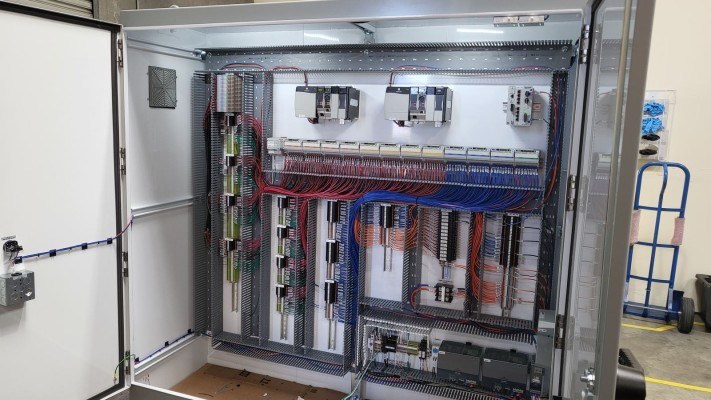
The eight manufacturers who shipped a Deschutes cabinet six weeks after the sheet was published had been building the same thing to different drawings for years. They had already noticed their engineering repeating. Once a slot has a name, the company that named it ships first. The next names are being written now, in OCP documents anyone can read, and the tier that reads them early is the tier that gets bought rather than bypassed.
Sources
Open Compute Project. "Realizing the Open Data Center Ecosystem Vision." Press release, October 14, 2025. Announces the Open Data Center for AI initiative, the Diablo 400 v0.5.2 specification (effective May 30, 2025) and the Project Deschutes CDU specification contribution (September 5, 2025). Initiative coverage: HPCwire.
Google Cloud. "Enabling 1 MW IT racks and liquid cooling at OCP EMEA Summit." April 29, 2025. The ±400 VDC announcement, the Mt Diablo collaboration with Meta and Microsoft, and the Deschutes generation history.
Google. "Project Deschutes: A 2MW CDU." ARPA-E COOLERCHIPS meeting, November 20-21, 2025. Capacity, flow, pressure and approach figures.
Data Center Dynamics. "Companies show off Google-inspired Project Deschutes CDUs." October 17, 2025. The eight manufacturers.
NVIDIA. "NVIDIA 800 V HVDC Architecture Will Power the Next Generation of AI Factories." May 20, 2025; and "Why Scaling AI Compute Performance Requires a New Power Architecture." August 11, 2026. Partner counts and the 1 MW rack roadmap.
NVIDIA datasheets and product pages for K80, P100, V100, A100, H100, DGX-1, DGX-2, DGX A100, DGX H100 and DGX B200; NVIDIA technical blog, "Inside NVIDIA Blackwell Ultra," August 22, 2025; "Building the Modular Foundation for AI Factories with NVIDIA MGX," May 16, 2025 (120 kW per rack). Rubin and Rubin Ultra power figures are SemiAnalysis (February 2026) and Tom's Hardware (August 2025) estimates, not NVIDIA datasheets.
Data Center Dynamics. "Nvidia's Rubin Ultra NVL576 rack expected to be 600kW." March 18, 2025.
Telecommunications Industry Association. "TIA Unveils Revision C of the Global Data Center Infrastructure Standard." May 9, 2024; and "TIA Advances AI-Ready Data Centers with New ANSI/TIA-942 Addendum." March 24, 2026. Revision C changes summarized by Belden.
ASHRAE TC 9.9. "Emergence and Expansion of Liquid Cooling in Mainstream Data Centers." 2021 white paper. Liquid cooling classes and chiller guidance.
Uptime Institute. Global Data Center Survey 2026 (July 2026) and 2025. Rack density and high-density share.
IAEI Magazine. "Modern Data Centers: Electrical Trends, Risks, and NEC 2026 Implications." 2026. Article 270 and Article 645 changes.
Schneider Electric. Prefabricated power modules press release, September 17, 2026; "Brownfield data center modernization for AI," February 26, 2026; Motivair acquisition completion, February 28, 2025.
Eaton. Quarterly earnings releases and calls, Q4 2025 through Q2 2026; Q1 2026 call transcript; "Eaton completes acquisition of Boyd Thermal," March 16, 2026; skid-based modular power.
Vertiv. Quarterly earnings releases and presentations, Q3 2023 through Q4 2025.
Data Centre Review. "Liquid cooling retrofits could cut AI data centre upgrade costs by around 80%." June 2, 2026, citing STL Partners.
Earlier pieces referenced: "Terafab and the Category Error Inside AI" (March 24, 2026); "Market Brief: Rubin, Warm-Water Cooling, and the New Build Logic of AI Infrastructure" (March 22, 2026); "We Got Faster at Building Data Centers. We Didn't Get Faster at Turning Them On." (March 28, 2026).