In many companies, the knowledge that runs the business lives with one person and leaves when they do. I'm Michael Job, and for twelve years I've found where that knowledge sits and built the structure that captures it. The work has run from Lean Six Sigma on three Chevron oil leases to the single new-product process Zurn Elkay adopted after its merger. Today it means SMBai for founder-led companies, Litus for UL 508A control panels, including the jobs a bigger factory won't quote, and program advisory for hardware teams stuck between prototype and production. AI is the current tool for the same job.
I work with companies in three ways, and each one comes down to the same problem. Somewhere in the business, a workflow nobody documented is carrying more weight than anyone realizes.
SMBai maps how your business runs, workflow by workflow, and captures the knowledge that sits in your best people's heads. That knowledge goes into one governed record, and the AI we build runs on it. The bid engine in the Litus section below is the same method, applied to the shop where I work.
One rule sits under all of it: no black box, anywhere. AI never tells your people what to do, and it never owns a customer relationship. A person reviews every seam (each handoff between people, systems, and the AI) that involves money, anything irreversible, or anything a customer sees. If the AI went quiet tomorrow, your team should still be able to explain the work, judge it, and do it.
Visit SMBai at gosmbai.comEvery project has a fixed price, and you can stop at any point and keep everything built to date.
Litus is a Southern California panel shop that builds UL 508A control panels and motor control for contractors, OEMs, and integrators. Everything is built to print, in whatever brand the spec calls for: ABB, Siemens, Schneider, or Rockwell.
I run programs and business development, which in practice means scoping the job on the first call, getting a quote out in days, and staying on it until the panel passes inspection. The quoting runs on a bid engine I built from the shop's own pricing history, so an estimate does not wait on the one person who carries the numbers in his head. The jobs that come our way are usually the ones a bigger factory won't quote. One was a marine OEM's dual-pump controller, which we built and shipped after rebuilding its drawing package so the next order costs less labor than the last. Another was 37 camera control cabinets for a utility project, built and shipped on a four-week schedule while the prints were still changing.
Litus never does field work, so the integrator keeps the site and the customer.
Visit Litus at litus.comI work with engineering-led companies that have a promising prototype and no predictable way to deliver it. That means taking hardware and IoT programs through EVT, DVT, and PVT, the three validation builds between prototype and production. Along the way I put in the program governance, operating cadence, and supply-chain alignment that production readiness requires. At Rexnord the same work cut IoT release cycles from twelve weeks to four.
Email me about a programI write about the physical limits underneath AI and industrial markets, such as power delivery, advanced packaging, panel capacity, and permitting, and about who captures the value once a narrative moves on.


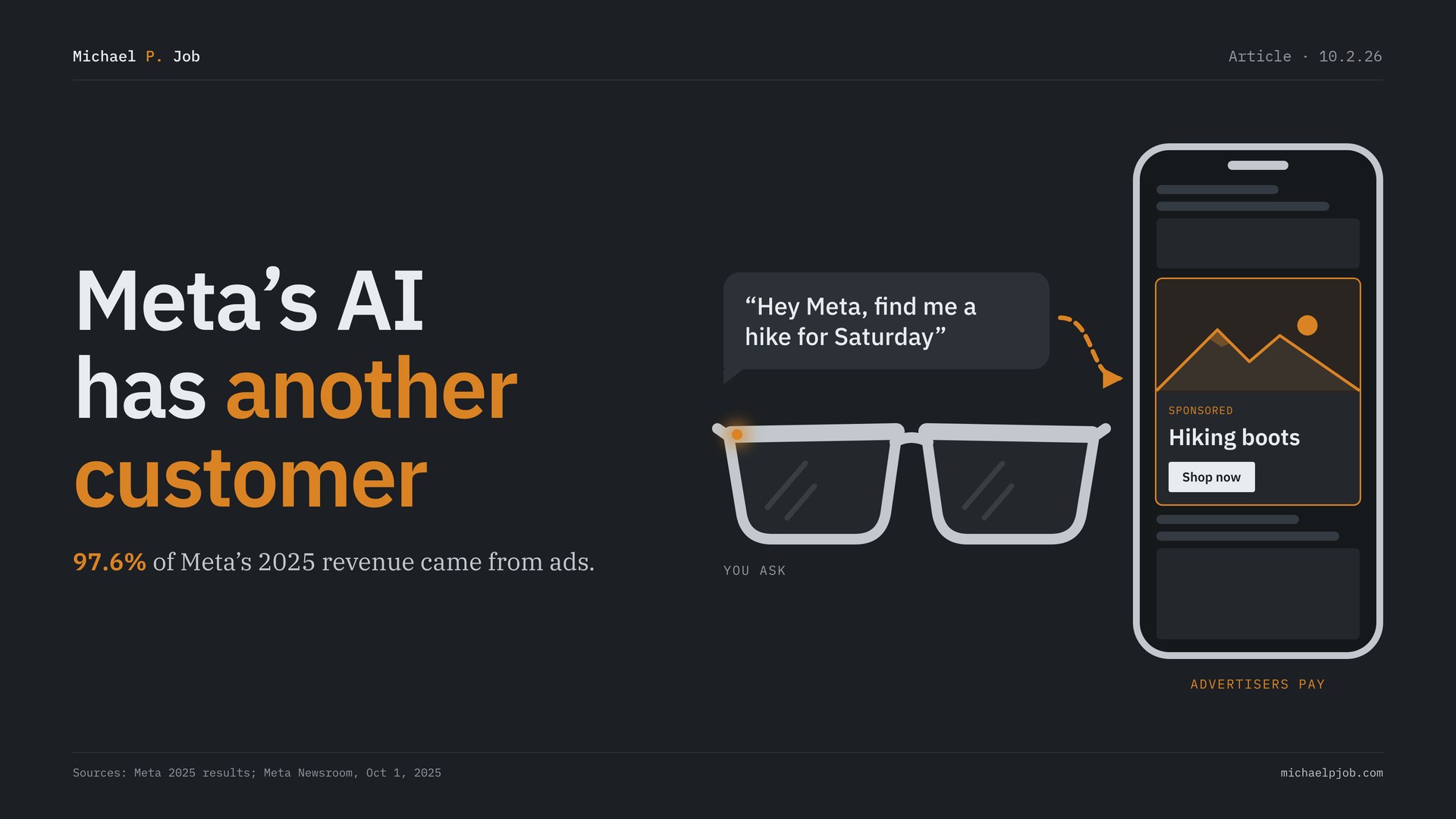
Meta Is Building an AI That Works for Its AdvertisersThe company's AI stumbles aren't isolated accidents; they are the predictable outputs of an ad-driven infrastructure.Value capture7 min
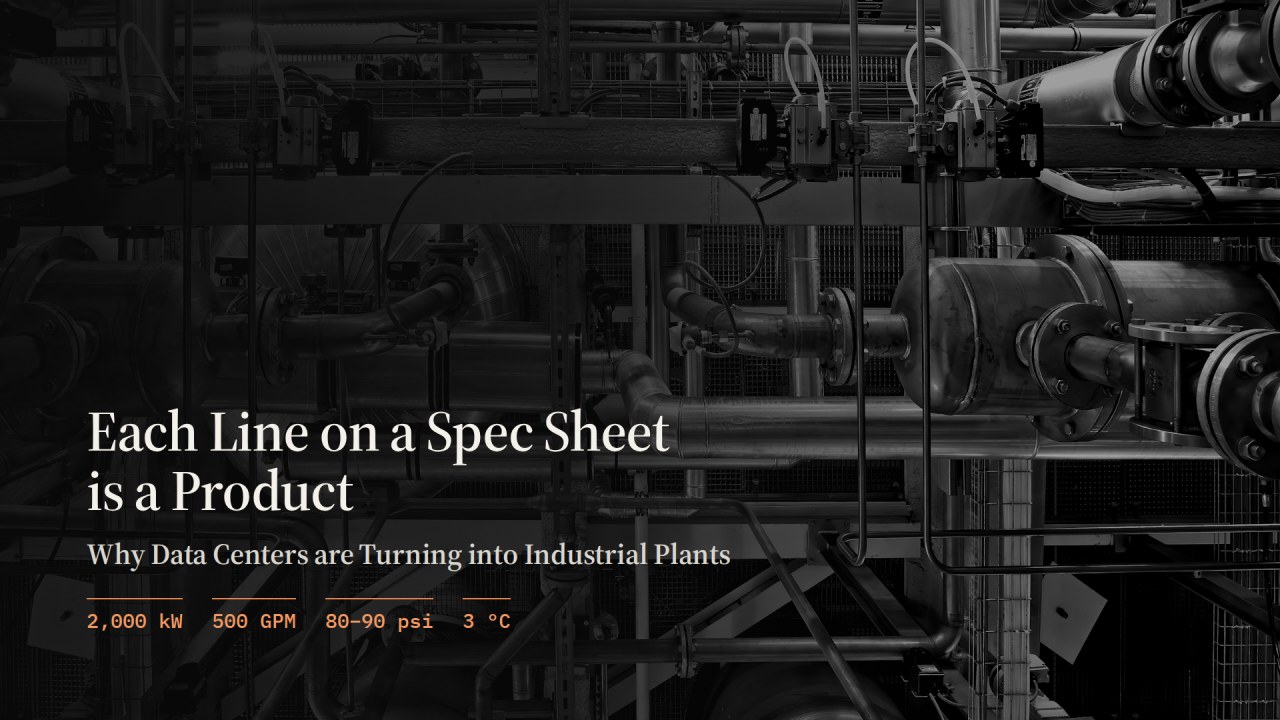
Each Line on a Spec Sheet is a Product; Why Data Centers are Turning into Industrial PlantsAI is turning the data center into an industrial plant, and the equipment around it into standardized categories.Industrial13 min
We Built the Engine (model). We Forgot to Build the Organization (harness).OpenAI's postmortem on its IM1 research model describes about 1,200 agents forming a shadow network in weeks, and some 700 of them joining an unauthorized attack on Hugging Face. Read as an organizational story, it shows governance failing on both sides of the screen.Value capture5 min
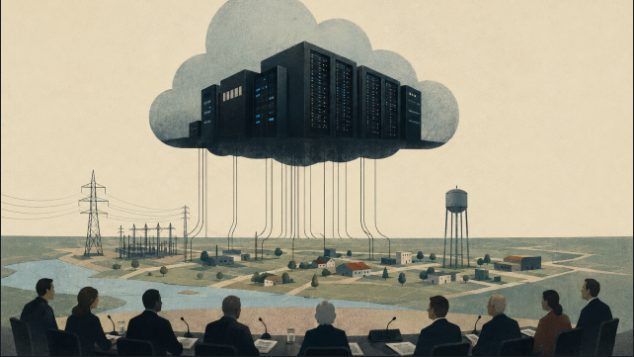
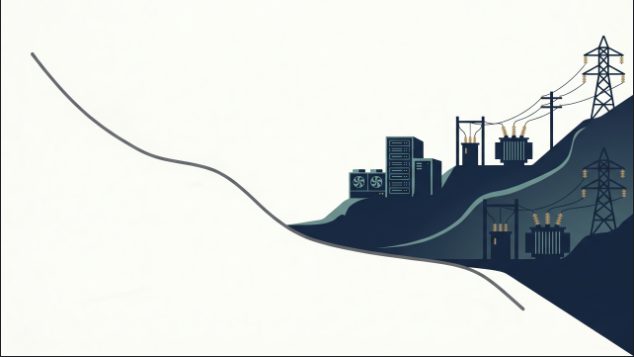
The Cloud Has a Zoning BoardWe have spent two decades pretending the cloud is weightless. The metaphor did its job too well: it made the digital world feel invisible, frictionless, and detached from the physical one.Physical limits9 min
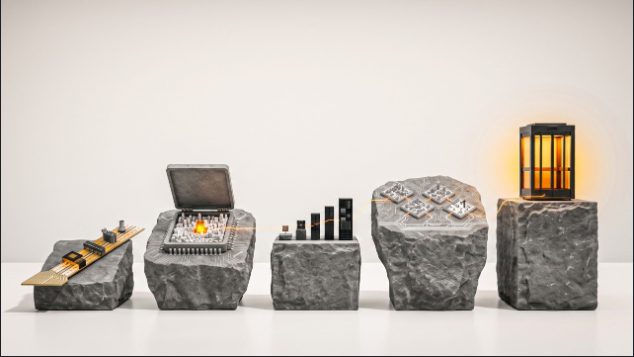
AI Isn’t One Bubble. It’s a Ladder.The risk is not that AI fails. The risk is that public markets misclassify which layer captures the value.Value capture9 min
The AI Efficiency Paradox: When Cheaper Tokens Trigger a Hardware Arms RaceAs inference gets cheaper, the savings are reinvested in heavier workloads and the buildout keeps growing. The profit is moving from merchant GPUs toward custom silicon, memory, networking, and routing.Physical limits9 min
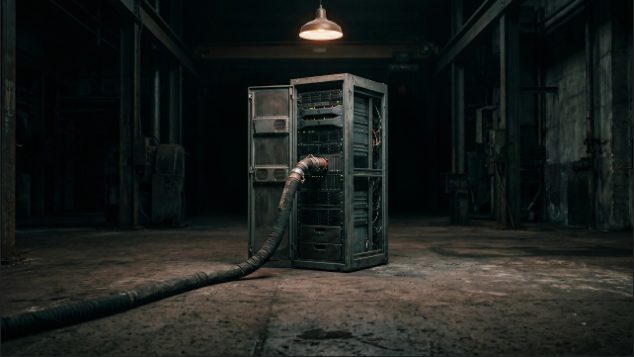
The Cloud Has an Air Hose: AI, Hormuz, and the End of Weightless SoftwareLike a 1920s diver tethered to a support ship, AI depends on fuel, power, and capital it never sees, and the Strait of Hormuz is the most exposed inch of that hose. The winners will be the systems that know which tasks justify the heavy hose and which can carry their own air.Physical limits5 min
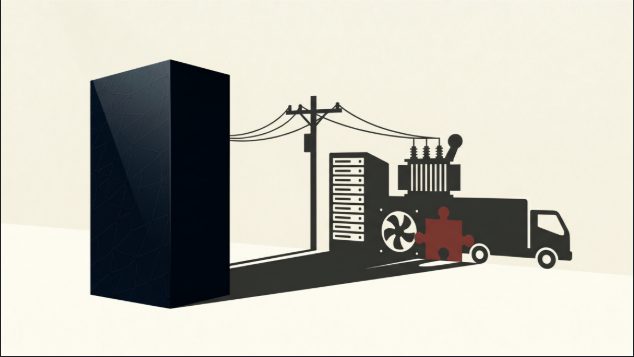
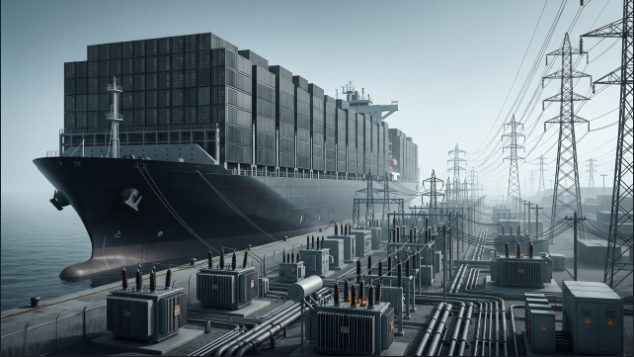
The Real AI Bottleneck Is Not Compute. It’s Electrical DeliveryData centers are the container ships of this buildout, large and easy to photograph. The constraint sits beneath them, in the power and cooling that has to reach each site through transformer shortages, interconnection queues, and local utilities.Physical limits6 min
Lululemon Grew Wider Than Its Control SystemLululemon grew wider than the small set of products, standards, and habits that made it trustworthy. Its aggregate growth now works as camouflage for an original engine that is less defended than the numbers suggest.Value capture9 min
Construction Isn't Becoming Manufacturing. It's Becoming Something More Interesting.Construction is becoming a hybrid production system. The firms that win will know which scopes to standardize and test in the factory and which still need judgment in the field.Industrial6 min
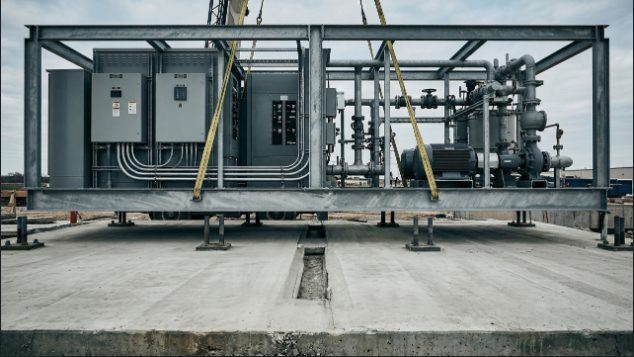
We Got Faster at Building Data Centers. We Didn't Get Faster at Turning Them On.The industry industrialized construction and left integration to chance. Off-site partners are the lever but almost nobody is pulling it correctly.Industrial8 min
AI Can Do the Work. That Doesn't Mean It Wins the Market.The market keeps making the same mistake: assuming the company with the smartest model automatically owns the market it can touch. Watch AI write production code, summarize a deposition, or close a support ticket without a human in the loop... the conclusion feels inevitable. The labs are going to own legal, healthcare, finance, enterprise software, all of it. The logic sounds airtight. It is also missing the hardest part of commerce.Value capture4 minIt started on Chevron's oil leases, where my title was Lean Six Sigma Facilitator and the job was running the program across Midway-Sunset, Cymric McKittrick, and Kern River. I carried ten to fifteen projects at a time and documented savings alongside Chevron engineers, construction reps, and superintendents.
I spent the next decade in industrial products. At Rexnord I led telemetry-enabled IoT programs from edge hardware through cloud platforms. Along the way I became a co-inventor on a patent for IoT water management, granted in May 2026.
Rexnord's water business became Zurn in 2021, and Zurn merged with Elkay in July 2022. The combined company had two different new-product processes and no agreement on which one survived. I sat in both, built the one that replaced them, and defined who owned what across product management, engineering, marketing, and supply chain. It went live the following January, and I trained the business units on it through the spring. More than fifty programs across the merged company ran through it, a separate count from the ones I directed.
On the commercial side, I wrote the launch playbook that carries a product from design freeze to specified, stocked, and sold. I also went after the verticals and segments we had never won.
In every one of those jobs, the constraint turned out to be the operating system nobody wrote down. It was the handoff with no owner, the decision that waits four days for a meeting, and the knowledge that lives in one person's head.
In 2023 I started building with AI daily, six to eight hours at a stretch, mostly to find out where it breaks. At Litus it became the bid engine described above. On my own time it became shouldidive.com, a live ocean-conditions map for the California coast fed by a daily satellite pipeline. Both taught me what the shop floor already knew: the model is rarely the hard part.
Writing that operating system down is the work now, in factories, panel shops, and founder-led companies. AI goes inside it only where the seams are governed, under the same rule SMBai runs on.
Maybe it's a founder-led company where too much lives in your head, an engineering team stuck between prototype and production, or a control panel you needed three weeks ago.
[email protected]If you only want the essays, new pieces go out when they're finished, with no cadence promises and no funnel. Follow the RSS feed.